

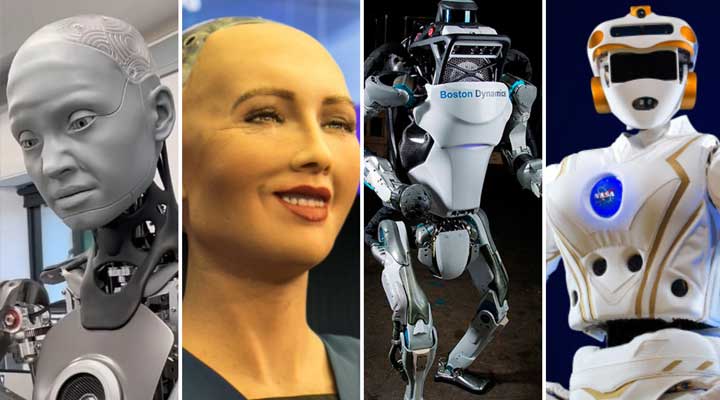
Human-like robot development
Advancements in artificial intelligence, similar to OpenAI's ChatGPT, are fast-tracking progress and the development of humanoid robots, especially in China, a major global manufacturing hub. After a decade or so in existence, the AI landscape has been transformed by new chatbots, which excel in understanding and generating human-like content. Although U.S.-based technology such as ChatGPT isn't officially accessible in China, local tech giants such as Baidu have swiftly brought out similar models.
In the world of robotics, generative AI is revolutionizing how machines perceive and interact with their surroundings. Li Zhang, the Chief Operating Officer at Shenzhen-based LimX Dynamics, noted a significant acceleration in their projects. Just three months into his role at the two-year-old startup, Li adjusted his timeline dramatically, cutting down the expected development period for a humanoid robot from a decade to just five to seven years, remarking that AI has turbocharged research and development efforts.
Companies around the world are seizing these development opportunities, with OpenAI backing several humanoid robot startups, and Elon Musk's Tesla is also making headways with its Optimus robot. Additionally, leading Chinese electric car maker BYD, invested in Shanghai's Agibot within months of its inception, highlighting the rapid pace of development.
The phenomenon has even caught the attention of Chinese President Xi Jinping, who was pictured observing a humanoid robot during his visit to an exhibition in Shanghai, underscoring the national interest in robotic advancements.
While humanoid robots are still a way away from being used in homes, factories making electronics, cars, and machinery are already benefiting from these breakthroughs and are a good place to test them. China is now the world's largest installer of industrial robots, having overtaken Japan in 2013 with more than half of the world's total.
However, replacing human workers entirely is still a distant reality, as while AI may enable robots to mimic human decision-making, mechanical challenges continue to limit their capabilities and don't solve the issues of robotic movement.
The economic factor can't be ignored either, with the potential for widespread adoption of robots increasing as production costs fall. The startup accelerator, Founders Space, is collaborating with a Chinese startup that plans to begin mass production of robots within a year with the goal of making them cheap enough to justify their use in many new areas.
In fields like pharmaceutical research, generative AI is proving to be a cost-saver in unexpected ways. Alex Zhavoronkov, CEO of Insilico Medicine, pointed out that instead of cutting staff, AI leads to fewer failed experiments, which in turn streamlines the development process and significantly cuts costs. Large pharmaceutical companies, which traditionally spend millions on testing, carrying out thousands of tests, could see drastic reductions in the number of tests needed, thanks to AI.
As AI continues to evolve, its integration into various industries will lead to a major change in capabilities and in how businesses operate and promises a future where robotic assistance is both common and crucial.