

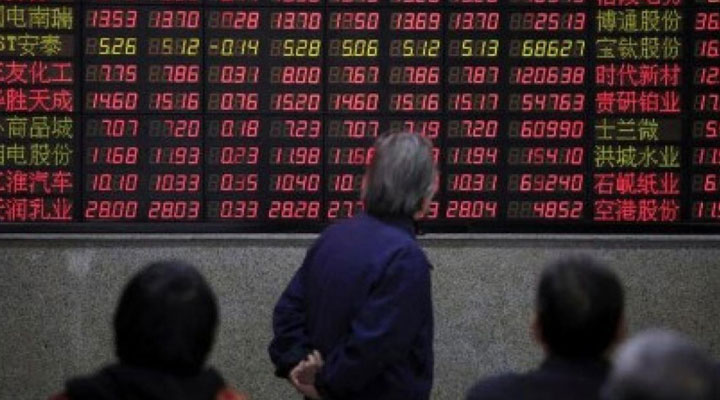
Retail Investors Flee China's Markets
Chinese retail investors are outpacing their foreign counterparts in an attempt to get their money out of the nation's stuttering stock markets and seeking refuge from the storm in.
The influx of new cash has led to soaring prices in global index funds as investors diversify away from the turbulent domestic economy.
While world stocks on average saw a 20% increase in value last year, gold was up 13% and Bitcoin surged 155%, China's blue-chip CSI300 index dropped by 11%, marking a five-year low. Although promises of support from Beijing have resulted in a slight market recovery this week, many investors have taken the bounce as their opportunity to sell, leaving a market that is heavily dependent on retail money in a perilous position.
Due to China's restrictions on allowing its citizens to invest outside the country, exit paths such as the Qualified Domestic Institutional Investor program (QDII) and other ways of moving money overseas are bottle necked, leading many to turn to banned assets such as Bitcoin. The demand for the 400 or so dollar-denominated wealth management products issued by Chinese banks is also high, with over 131 new products launched in January alone.
In response, China has trippled individual quotas for overseas investments in Hong Kong and Macau, following a more than 10-fold surge in outbound investment to 4.9 billion yuan ($683 million) in 2023. Despite this, yuan deposit rates are declining as households hoard cash amidst the economic uncertainty.
Investors are also flooding into China-listed funds tracking overseas markets, causing some prices to rise 30-40% above asset values, and leading to trading suspensions and warnings from asset managers.
Retail investors have been expressing their disillusionment with domestic markets, echoing sentiments of foreign institutions that have been pulling out of China's markets, but with retail investors making up more than two thirds of Chinese equity turnover, their departure could have a lasting impact.
The trend of opening overseas accounts or seeking foreign investments has been driven by several factors, including the property market slump, weakening of the currency, and increasing geopolitical risks. Despite China's economy repotedly growing 5.2% in 2023, the recovery has not been even across all sectors, and December data revealed slow consumption and a very untypical fall in home values.
Most global emerging market funds are now either equal or underweight in Chinese investments as market recovery prospects have been dampened and many investors predicting the situation will take years to resolve. The premiums on China-listed ETFs tracking international indexes like the MSCI USA 50 Index and the Nikkei have reached record levels of 40%.
However, a recent cut in bank reserve requirements by the PBOC has temporarily stemmed the exodus, marking the best week for Chinese stocks in six months. But with the CSI300 losing 11% since Beijing pledged its support six months ago, analysts argue that more stimulus and structural reforms are necessary to stimulate recovery.
In 2023, new foreign investment dropped to its lowest in three years, affected by a slow economic rebound, a series of investigations launched into foreign firms, and geopolitical tensions. Despite the Ministry of Commerce's attempts to boost investment, tangible actions are yet to be seen.