

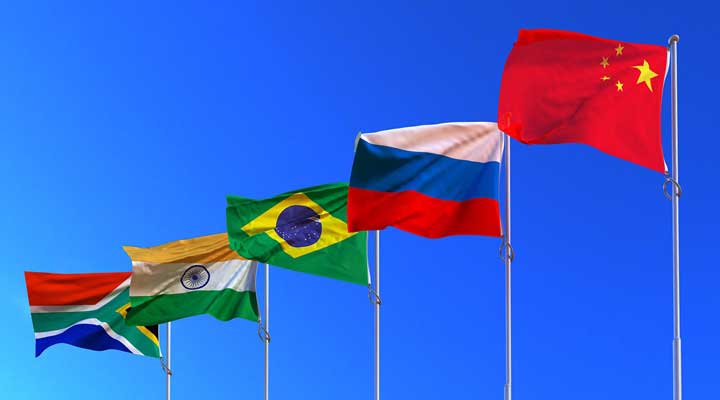
Western sanctions could strengthen BRICS.
The BRICS alliance (Brazil, Russia, India, China, and South Africa) is drawing closer due to Western sanctions imposed on Russia, as discussed by oil industry leaders at the recent APPEC conference in Singapore. Russell Hardy, the CEO of energy trading firm Vitol, noted the effectiveness of current sanctions, emphasizing how they have cut revenues and lowered invoice prices for Russian goods within the oil markets.
Last year, in response to Russia's invasion of Ukraine, the Group of 7 nations implemented an oil price cap mechanism. This mechanism aimed to limit revenue flowing into the Kremlin's war efforts while maintaining Russian oil flows in the global market. As part of this strategy, the European Union adopted an anti-circumvention tool in June to curtail the sale, supply, and export of specified sanctioned goods and technology to intermediaries supporting Russia. In May, the G7 announced its intention to restrict trade in Russian diamonds.
Nevertheless, these sanctions have unintended consequences that Russell Hardy considers "negative." He pointed out that they are fostering stronger bonds among BRICS countries, which counteracts Western political dynamics. In a recent meeting, the bloc invited oil giants such as Saudi Arabia, the UAE, Iran, Ethiopia, Egypt, and Argentina to join in 2024.
Hardy expressed concerns about the growing ties between Russian energy supply and BRICS countries in the coming years, viewing it as a potentially adverse development.
The BRICS nations have encountered various challenges in their relationships with the West. China, for instance, has seen rising tensions with the U.S. across diplomatic, trade, and technology fronts, leading to mutual restrictions on exports. Similarly, India and China have increased their imports of discounted Russian crude since the Ukraine conflict, with Russia becoming India's primary source of crude oil, accounting for approximately 40% of its imports.
During a panel discussion at the event, Fereidun Fesharaki, chairman of energy consultancy Facts Global Energy, highlighted the global irritation with U.S. government sanctions and suggested that BRICS could counterforce or counterbalance the G7 or G20.
At the recent BRICS summit in South Africa, Brazilian leader Luiz Inácio Lula da Silva emphasized that the alliance is exploring the possibility of adopting a common currency, and during a state visit to China in April, he also called for reduced reliance on the U.S. dollar in global trade. However, Fesharaki cautioned that de-dollarization, or moving away from the U.S. dollar as the primary currency for trade, remains a distant goal. He acknowledged the U.S. dollar's immense influence, stating that replacing it would cause significant turbulence in oil prices, which is not desirable.